Document Verification Services in UAE | How to Verify Your Documents Safely & Correctly

Documents play an important role in personal, business, financial, commercial, and administrative transactions in the UAE. Whether you are submitting a contract, business document, identification-related document, academic certificate, authorization, affidavit, or another important record, ensuring that your documents are accurate and properly verified can help prevent unnecessary delays and complications.
However, document verification can sometimes be confusing. Different documents may have different requirements, and the appropriate verification process can depend on the purpose of the document, the issuing authority, and where the document will be used.
At Key Corner Legal, we provide professional document verification support to individuals, entrepreneurs, business owners, and organizations in the UAE.
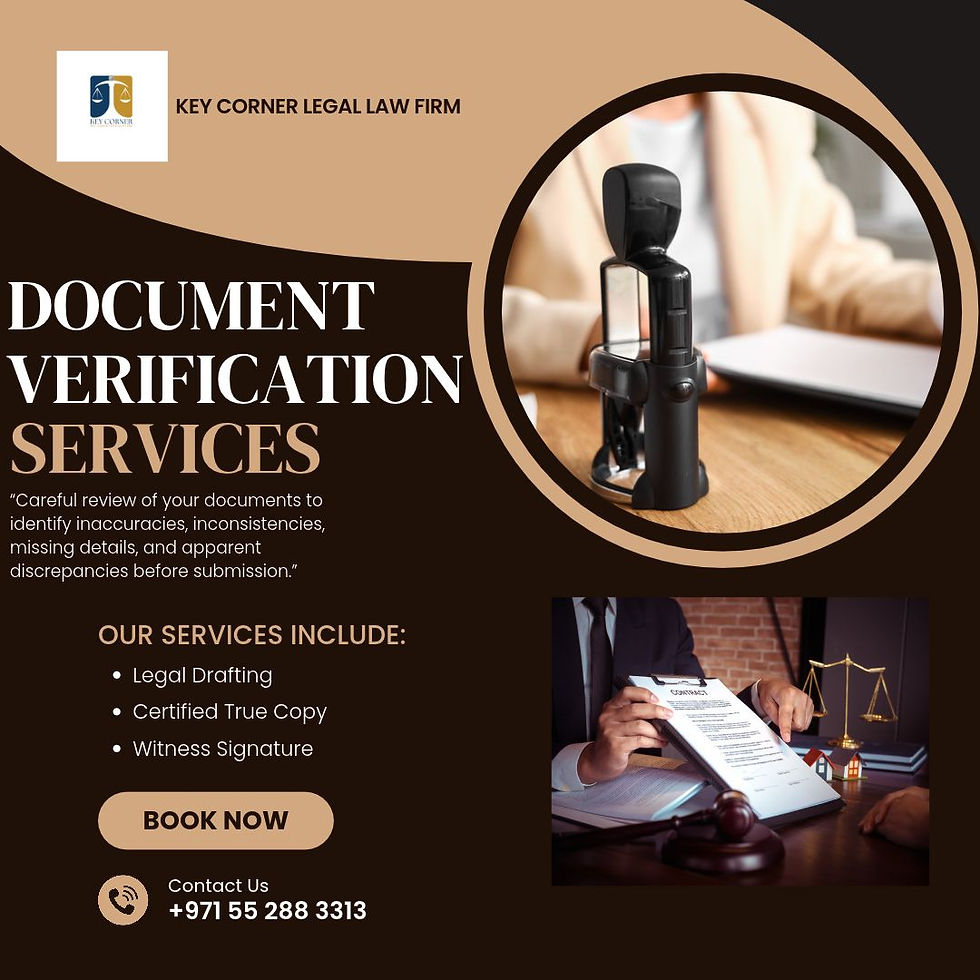
What Is Document Verification?
Document verification is the process of examining a document to assess its authenticity, accuracy, completeness, and suitability for its intended purpose.
Depending on the circumstances, verification may involve checking information appearing on the document, reviewing supporting documents, identifying inconsistencies, and determining whether additional certification, attestation, witnessing, or other formalities may be required.
The exact process depends on the nature and intended use of the document.
Why Is Document Verification Important in the UAE?
Using an incorrect, incomplete, inconsistent, or improperly prepared document can create unnecessary problems.
Document verification can help you identify potential issues before submitting or relying on important documents.
Some common benefits include:
Identifying missing information
Detecting inconsistencies
Reducing the risk of rejection
Confirming that documents are properly prepared
Supporting business and personal transactions
Helping clients understand document requirements
Preventing avoidable delays
Protecting important legal and commercial interests
For businesses, proper document verification can also contribute to better internal controls and more reliable transactions.
What Types of Documents May Require Verification?
The documents requiring verification can vary significantly depending on the circumstances.
Common examples may include:
1. Business Documents
Businesses frequently deal with documents that require careful review and verification.
These may include:
Commercial agreements
Company documents
Business contracts
Partnership documents
Corporate resolutions
Authorization documents
Letters and declarations
Supporting business records
Verification can help ensure that the relevant information is consistent and that the document is suitable for its intended purpose.
2. Contracts and Agreements
Contracts can create legally significant obligations for the parties involved.
Before relying on an agreement, it may be appropriate to verify the identity of the parties, relevant information, supporting documentation, signatures, and other important details.
Contract verification can be particularly useful before entering into significant commercial transactions.
3. Personal and Legal Documents
Individuals may need assistance with various documents for personal, administrative, or legal purposes.
Depending on the circumstances, these may include:
Declarations
Affidavits
Authorization documents
Undertakings
Consent documents
Supporting legal documents
Other formal written documents
4. Academic and Professional Documents
Educational and professional documents may sometimes need to be verified or subsequently certified or attested depending on their intended use.
Examples may include:
Academic certificates
Diplomas
Professional certificates
Training certificates
Educational records
The requirements can differ depending on where and why the document is being submitted.
5. Documents Used for Commercial Transactions
When businesses enter into transactions, document accuracy becomes particularly important.
Invoices, agreements, authorizations, corporate documents, declarations, and other supporting records may need to be reviewed to ensure that relevant information is consistent.
What Is the Difference Between Document Verification and Attestation?
Document verification and document attestation are related but are not necessarily the same thing.
Document verification generally involves examining a document and checking relevant information, authenticity, consistency, or suitability.
Attestation, on the other hand, is a formal process through which an authorized authority certifies or authenticates a document or signature according to applicable requirements.
A document may require verification before proceeding with a separate certification or attestation process.
The appropriate procedure depends on the type of document and its intended use.
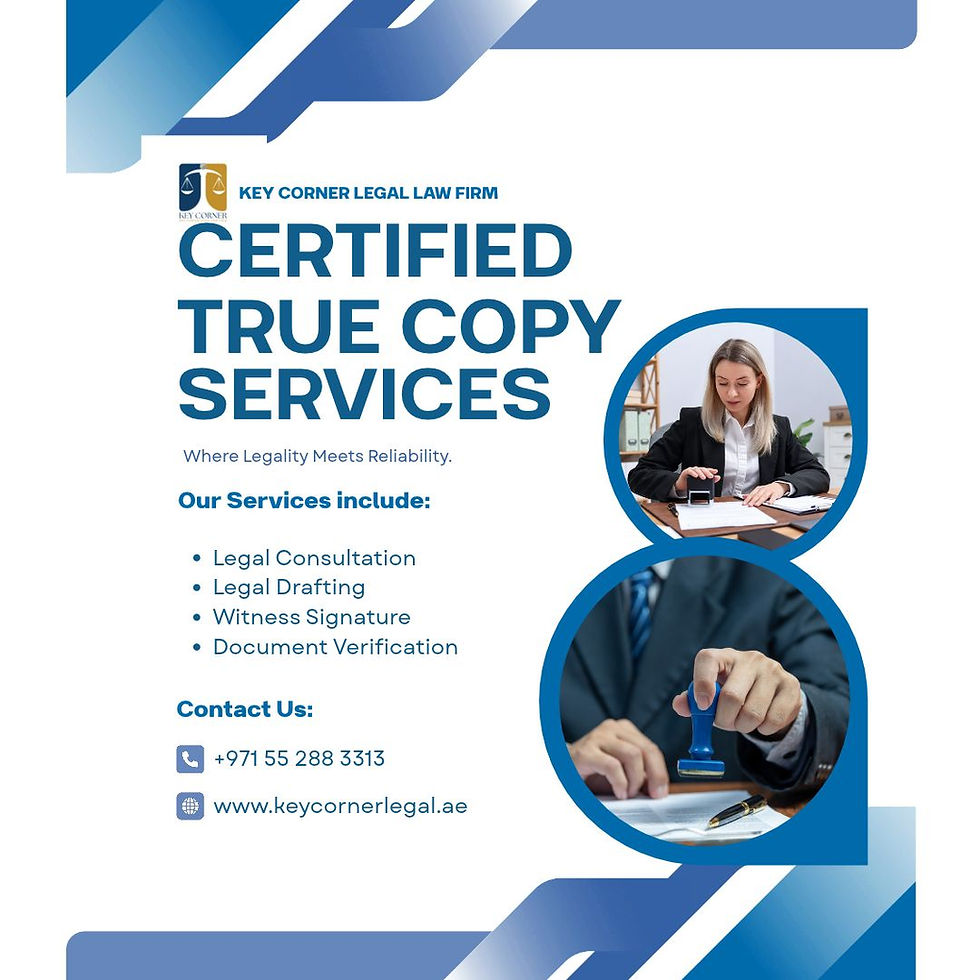
What Is a Certified True Copy?
A Certified True Copy (CTC) is a copy of a document that has been certified as a true copy of the original by an authorized person or professional, subject to applicable requirements.
Certified true copies may be requested for various administrative, business, legal, financial, or other purposes.
It is important to distinguish between:
An ordinary photocopy
A scanned copy
A certified true copy
An attested document
Each may serve a different purpose.
If an organization specifically requests a certified true copy, submitting an ordinary photocopy may not satisfy its requirements.
When Should You Verify Your Documents?
Document verification is particularly useful when:
Before submitting documents to an authority
If a document is being submitted to a government authority, company, institution, bank, or other organization, checking it beforehand may help reduce the possibility of rejection or delay.
Before entering into a significant transaction
When important financial or commercial interests are involved, verifying relevant documentation can help you make a more informed decision.
Before signing an agreement
If you are about to sign a significant contract, checking the relevant documents and information beforehand may help identify inconsistencies or potential concerns.
When documents contain conflicting information
Different documents should generally contain consistent information where appropriate.
Differences in names, dates, identification details, company information, addresses, or other material information may require clarification.
When you are unsure about document requirements
If you are uncertain about whether a document requires verification, certification, witnessing, or another procedure, professional guidance can help you determine the appropriate next step.
Common Document Verification Problems
Several issues can cause difficulties when documents are being reviewed or submitted.
Incorrect names or personal information
Even small differences in spelling can create complications, particularly where official records are involved.
Missing signatures
Some documents may require signatures from specific parties before they can be used for their intended purpose.
Incomplete information
Missing dates, identification details, supporting information, or other required fields may affect the usability of a document.
Inconsistent information
Information appearing differently across related documents can result in questions or additional verification requirements.
Unclear copies
Poor-quality photocopies or scans may make important information difficult to read or assess.
Incorrect document format
Some organizations may have specific requirements regarding document format, signatures, certification, or supporting records.
How to Verify Documents Safely and Correctly
A careful approach can help reduce document-related problems.
Step 1: Identify the purpose of the document
First, determine why the document is being prepared or submitted.
The intended purpose can affect the required verification or certification procedure.
Step 2: Check the information
Review names, dates, identification numbers, company information, addresses, signatures, and other relevant details.
Step 3: Compare supporting documents
Where appropriate, compare the information against the original or supporting records.
Step 4: Check signatures and dates
Make sure required signatures and dates are present and properly completed.
Step 5: Determine whether certification is required
Some situations may require a certified true copy, witnessing, attestation, or another formal procedure.
Step 6: Keep copies of important documents
Maintain clear copies of documents and supporting records for your records.
Step 7: Seek professional assistance where necessary
If you are uncertain about the authenticity, requirements, or appropriate procedure, professional document verification support can help you determine the next steps.
Can Document Verification Prevent Legal Problems?
Document verification cannot guarantee that a dispute or legal problem will never occur. However, proper document checking can reduce avoidable errors and help identify potential concerns before they become more serious.
For example, discovering an incorrect company name before signing a contract is much easier to address than discovering the problem after a commercial dispute has already developed.
Similarly, identifying missing information before submitting a document may help avoid unnecessary delays.
Document Verification for Businesses in the UAE
Businesses deal with large numbers of documents every day.
Contracts, invoices, company records, declarations, authorizations, supplier documents, client documents, and other records can have significant commercial importance.
A consistent document verification process can help businesses:
Improve document accuracy
Reduce administrative errors
Identify inconsistencies
Maintain better records
Protect commercial interests
Improve transaction readiness
Reduce avoidable delays
For growing businesses, professional legal support can be particularly valuable when documents have significant financial or contractual consequences.
Document Verification for Individuals
Individuals may also require professional assistance when dealing with important documents.
Whether you are preparing documents for a business transaction, administrative requirement, legal matter, or another purpose, ensuring that the documents are properly prepared and verified can provide greater confidence.
Key Corner Legal can assist clients in understanding their document-related requirements and identifying appropriate next steps.
Why Choose Key Corner Legal for Document Verification?
At Key Corner Legal, we understand that documents are more than pieces of paper. They can represent contractual obligations, financial interests, business relationships, personal rights, and important legal matters.
Our approach is focused on providing professional, practical, and client-oriented support.
Our services include:
Document Verification Services
Certified True Copy Services
Legal Consultation
Legal Drafting
Witness Signature Services
Affidavit Drafting and Related Document Support
We assist individuals, entrepreneurs, business owners, and organizations with their legal and document-related requirements in the UAE.
Frequently Asked Questions About Document Verification
What is document verification?
Document verification involves reviewing a document and relevant information to assess its authenticity, accuracy, completeness, consistency, or suitability for its intended purpose.
Is document verification the same as attestation?
No. Verification and attestation are different processes, although they may sometimes be required together depending on the document and its intended use.
Can a document be verified before submission?
Yes. In many situations, reviewing and verifying a document before submission is a sensible way to identify potential errors or missing requirements.
Do all documents require verification?
No. The requirements depend on the type of document, its purpose, and the organization or authority to which it will be submitted.
What should I bring for document verification?
You should generally provide the relevant document and, where applicable, the original document, supporting records, identification information, or other materials relevant to the verification process.
Can businesses use document verification services?
Yes. Businesses can benefit from professional document verification when dealing with contracts, corporate documents, commercial transactions, authorizations, and other important records.
Get Professional Document Verification Services in the UAE
Whether you are an individual or a business, getting important documents checked before using or submitting them can help you avoid unnecessary complications.
If you need assistance with document verification in Dubai, Sharjah, or elsewhere in the UAE, Key Corner Legal can provide professional support based on the nature and purpose of your documents.
Phone: +971 55 288 3313
Email: info@keycornerlegal.ae
Final Thoughts
Documents can have significant legal, financial, and commercial consequences. A small error, missing signature, inconsistent detail, or incorrect document can sometimes result in delays or complications.
That is why it is important to take document verification seriously.
Verify before you submit. Check before you sign. Protect your interests before problems arise.
For professional Document Verification Services in the UAE, contact Key Corner Legal for reliable legal and document-related support.
Comments